
Disclaimer: The views and opinions expressed in this article are those of LSP and IPGATE AG. Statements made by Dr. Hans-Jörg Feigel are his personal views and do not necessarily represent the official position or views of Continental.
We often go about our daily lives relying on technology, rarely stopping to consider the brilliant minds behind the conveniences we take for granted. From the devices in our homes to the systems in our cars, countless innovations shape our world. Have you ever paused to think about the engineers working on small yet potentially game-changing components that could soon revolutionize your driving experience? It's easy to overlook the complex engineering that ensures everything in our car works seamlessly, but behind these advancements are talented individuals whose dedication and ingenuity are shaping the future of automotive technology.
Innovation doesn't happen overnight. It's fueled by curiosity, intelligence, and the relentless drive to fail — and try again — until something truly groundbreaking emerges, or like Dr. Anton van Zanten likes to say: "Innovation isn't about waiting for the perfect moment; it's about recognizing when an idea could work and pushing forward to make it a reality, even if others are still figuring it out."
While most are familiar with major automotive milestones like the invention of the wheel, the combustion engine, or even electric cars — by the way, did you know that Nikola Tesla laid the groundwork for the electric motor as early as 1887? — there's a lesser-known yet life-saving innovation already present in one of every three cars on the road: the brake-by-wire One-Box system.
This article is dedicated to the pioneers — the engineers of IPGATE, LSP and Continental — whose innovations are the building blocks of the One-Box fail-safe brake-by-wire systems (Integrated Brake System Technology, IBS-Technology, MK C1 Technology) and Two-Box fail-operational brake-by-wire systems (X-Boost Technology™) as we know them today.
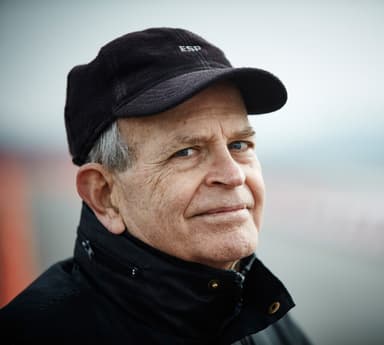
Dr. Anton van Zanten
Dr. Anton van Zanten, a Dutch inventor and automotive engineer born in Indonesia in 1940, is renowned world-wide for his contributions to vehicle safety technology. After moving to the Netherlands at age 10, he studied in Eindhoven for an MSc and earned a PhD from Cornell University, USA. He joined Robert Bosch GmbH in Germany in the 1970s. There, he proposed and led the development of the Electronic Stability Program (ESP), introduced in 1995 on the Mercedes-Benz S600, which greatly improved vehicle safety. Dr. van Zanten holds around 180 patents, with 36 focused on automotive safety, including electronic rollover and trailer sway mitigation. He also served as a consultant to IPGATE AG for several projects. Though retired in 2003, he continued to lecture at Universities, OEMs and in industry and consult in the field. His groundbreaking work earned him among many others the 2016 European Inventor Award in the Lifetime Achievement category and together with Armin Müller of MB the Porsche Prize and the Golden Dieselring.
Established in 1998 by Dr. Thomas and his father, Heinz Leiber, LSP Innovative Automotive Systems GmbH is a boutique engineering service with extensive experience in supporting clients to integrate technology solutions into their products efficiently and cost-effectively. Dr. Thomas Leiber established IPGATE AG in 2005. As a leader in brake systems and vehicle motion control, it offers patented technology and freedom to operate rights for vehicle technology for cutting-edge vehicle solutions. These include eMobility, autonomous driving, ePedal, and single-source chassis control systems, all developed by a team of seasoned engineers. Since its establishment, IPGATE AG has been collaborating with LSP Innovative Automotive Systems GmbH to offer comprehensive services to its clients.
Continental AG, founded in 1871 in Hanover, Germany, started as a rubber manufacturer under the name Continental-Caoutchouc und Gutta-Percha Compagnie. Over the years, it evolved into a leading producer of tires and automotive technologies, pioneering innovations like grooved vehicle tires and air springs. In 1998 Continental took over the brake specialist Alfred Teves GmbH, which was founded in 1906 and was one of the pioneers in Integrated ABS-Systems (1984). Today, Continental is a major player in the automotive industry, offering products ranging from safety systems to solutions for automated driving, connectivity, and sustainable mobility. With around 200,000 employees worldwide, the company remains a driving force in automotive innovation.
Introducing the One-Box

Imagine you're rushing down a winding country road, already running late for an important meeting. You're driving 100 km/h — maybe 20 km/h over the speed limit — because you just don't have time to slow down. Your mind is preoccupied, ticking off tasks for the day, deadlines looming over you. The hum of the electric motor and the smooth drive almost put you into a trance. Suddenly, out of the corner of your eye, you see movement. You turn your head, and your heart stops. A deer is darting across the road — right in front of your car.
Panic surges through you. You slam your foot on the brake, but it's clear: you only just noticed the deer. You don't have much time. But then, something incredible happens. Your car, equipped with the advanced One-Box electrohydraulic power-on demand braking system (short: One-Box EHB), springs into action the moment you apply the brakes. It's almost like the car anticipates your panic. The One-Box builds brake pressure at a speed that's almost impossible to comprehend — achieving up to 1G (9.81 m/s²) of deceleration in less than 150 milliseconds. The car responds before you even have a chance to fully process what's happening.
As you feel the car's grip tighten on the road, you realize the One-Box EHB has already cut down your braking distance significantly. Even though you were speeding, it's doing everything it can to bring you to a stop as quickly and safely as possible. But here's where the technology really shines. The One-Box EHB isn't just fast — it's reliable, even if something were to go wrong. The system is built with fail-safe mechanisms to ensure you're always covered. It uses dual microcontroller units (MCUs), meaning if one controller fails, the other will immediately take over. There's also a redundant Electronic Parking Brake (EPB) control that kicks in, adding another layer of security.
Thanks to the One-Box's EHB advanced automatic emergency braking (AEB) system, you're able to stop just inches from the deer. It bounds away into the woods, blissfully unaware of how close it came to disaster. You sit there for a moment, your heart still racing, as you realize just how lucky you are. That close call could've been a lot worse if not for the One-Box and its fail-safe features.
Who are the pioneers behind the One-Box?
Many readers may recognize the Anti-lock Braking System (ABS), first introduced in the 1978 Mercedes-Benz S-Class — a groundbreaking achievement by Heinz Leiber, who played a pivotal role in innovating, developing, and bringing the first generation of ABS to series production at Robert Bosch GmbH. Similarly, Dr. Anton van Zanten, also at Bosch in the 1980s, developed the famous Electronic Stability Program (ESP). It's no surprise that these visionary engineers, leveraging their expertise in automotive safety, also contributed significantly to the development of the One-Box EHB, furthering their legacy of pioneering innovations.
However, the journey began with Dr. Thomas Leiber, Heinz's son, who invented an extremely dynamic electric motor with a high torque and low motor inertia — a so-called dual air-gap (DAG) motor design that could accelerate to 3000 rpm in just 3 milliseconds. This was the technology-enabling component at the beginning of the invention of the One-Box EHB.
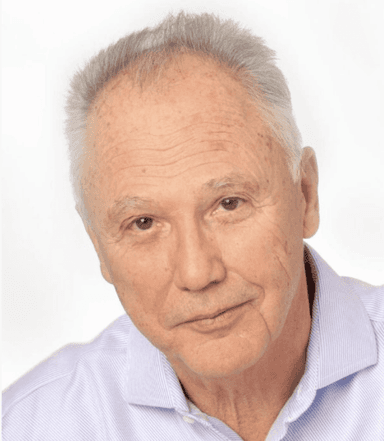
Heinz Leiber
Heinz Leiber is a renowned German inventor and automotive engineer, best known as a key inventor of the Anti-lock Braking System (ABS), a life-saving technology introduced in the 1978 Mercedes-Benz S-Class. Starting his career at Teldix and later at Robert Bosch GmbH, Heinz Leiber played a pivotal role in the innovation and launch of ABS 2.0, later serving as Vice President of Mercedes-Benz AG's Electrics/Electronics Division. With 589 patent families, including 396 related to brakes, Leiber's influence extends beyond ABS to designing the E/E Multi-BUS architecture and shaping future mobility concepts. Heinz Leiber has received numerous awards, including the Federal Cross of Merit and the Porsche Prize.
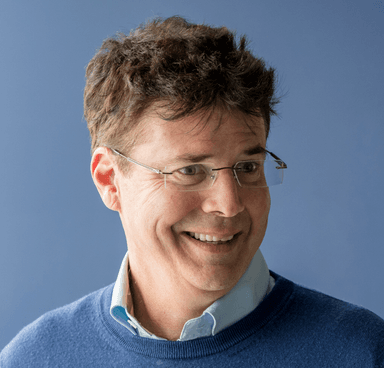
Dr. Thomas Leiber is a pioneering innovator and entrepreneur in automotive technology, holding nearly 500 patents in areas such as braking systems, vehicle safety, and autonomous driving. He earned a degree in Aerospace Engineering from the Technical University of Berlin and a doctorate in Electrical Engineering from the Technical University of Graz, further enhancing his expertise with a post-doctoral stint at MIT. Dr. Leiber's key innovations include the IBS Technology and later the X-Boost Technology™, designed to replace 2-box braking systems and enhance autonomous driving, and the IBSe (Intelligent Braking System), introduced in Formula E racing. He also pioneered Automated Emergency Braking (AEB) and developed a drive system for electric vehicles, anticipating the shift towards electric propulsion. Dr. Leiber has received numerous accolades, including the Wirtschaftswoche Top25 Start-Up Award and the CleanTech 100 Award, as well as the Plus X Award for innovation, design, and functionality.
"The IBS — the pioneering product of the One-Box EHB, as we know it today — was the result of a unique collaboration between my father and me, combining his extensive knowledge and experience in car brake system technology with my early innovations in my professional career. During a five-year collaboration with Magneti Marelli and Volkswagen on electric valve train actuation, along with my doctoral thesis work, I gained in-depth experience with electromagnetic actuators and advanced EC motor control. It was during this time that I discovered the potential of the double air gap motor design for dynamic and precise control. I shared the full potential of this motor with my father, and he immediately saw an opportunity to bring to life an idea that had previously seemed impossible. What my father recognized was that this motor, driving a plunger, could integrate multiple functions — such as brake force boosting, pressure modulation for ABS, and precise pressure control for regenerative braking — into a single system, reducing the number of components needed. This was the foundation of the first generation of the integrated brake system (One-Box EHB, also known as IBS Technology)." — Dr. Thomas Leiber
Getting a big player on board
Father and son quickly realized that bringing their vision to life would require more than just their combined knowledge and experience. To truly make their idea a reality, they needed the expertise of someone with a deep understanding of the Electronic Stability Program (ESP) — a key component in modern automotive safety. Of course, the only person who came to mind was the trusted Dr. Anton van Zanten, who had previously been hired by Heinz Leiber while working at Bosch and was easily convinced to join the team.
Dr. van Zanten's specialized knowledge of control functions complemented Heinz Leiber's extensive experience in brake systems and Dr. Thomas Leiber's expertise in electric motors, creating a powerful and dynamic partnership. With the team now in place, Dr. Thomas Leiber recruited two talented engineers, Christian Köglsperger and Valentin Unterfrauner, who were working at LSP at the time. Together, father and son decided to formalize their groundbreaking concept by filing the first patent families in 2005 for what would later become known as the first patent members of the comprehensive IP portfolio A of IPGATE AG, constituting the IBS technology.
As Dr. van Zanten recalls, "From the simulation models to the real-world tests, we quickly realized the potential. We knew we had developed something that not only worked but could set a new standard in vehicle safety."
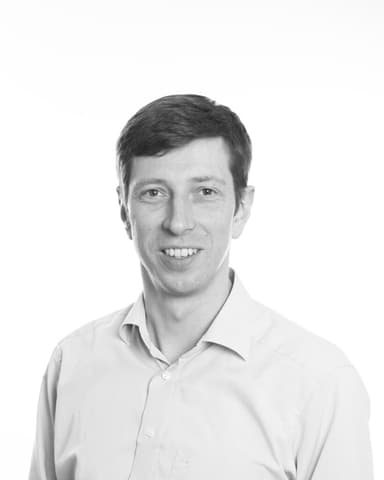
Christian Köglsperger
Christian Köglsperger is an electrical engineer known for his contributions to advanced braking technologies. As a co-inventor of several IPGATE AG patents, he has played a key role in developing one-box and two-box brake systems, significantly influencing braking solutions. His work has been instrumental in shaping brake-by-wire systems for concept vehicles and racing applications, particularly in Formula E. Previously, Christian Köglsperger served as COO at LSP Innovative Automotive Systems GmbH, where he contributed to the development of cutting-edge braking technologies.
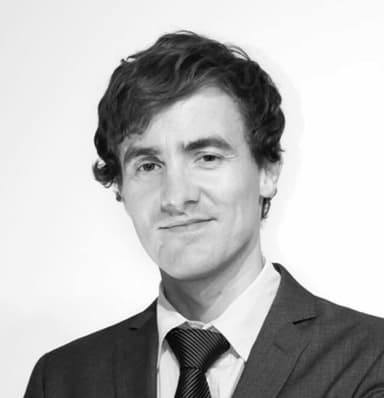
Valentin Unterfrauner
Valentin Unterfrauner is a skilled automotive engineer and innovator known for his contributions to advanced braking technologies. He is the former head of pre-development at LSP Innovative Automotive Systems GmbH and significantly contributed to various patents for IPGATE AG, focusing on one-box and two-box brake technologies. His expertise lies in developing innovative solutions for eMobility, autonomous driving, ePedal systems, and single-source chassis control. Valentin Unterfrauner's work supports the creation of cost-effective, sustainable, and future-proof braking systems, helping manufacturers integrate cutting-edge technology into their vehicles.
Rather than immediately investing time and resources into building a complex prototype, the team decided to leverage their strong industry reputation and credibility. Though the initial concept appeared overly simplistic to some, the basic prototype they created at LSP was enough to showcase its potential and convince their partners of its promise. Thanks to Heinz Leiber's industry connections to Dr. Karl-Thomas Neumann, who was the former acting CEO of Continental Automotive Systems from 2004–2009, the team had the opportunity to present the innovation to Continental in October 2005 and shortly after met with Dr. Hans-Jörg Feigel in June 2006.
Valentin Unterfrauner recalls, "When we presented our idea to one of the other key Tier 1 manufacturers previously, we faced a lot of resistance. In the end, it was at Continental, with Dr. Hans-Jörg Feigel's backing, where we really saw the potential for growth. He understood the value of our work and pushed for the support we needed."
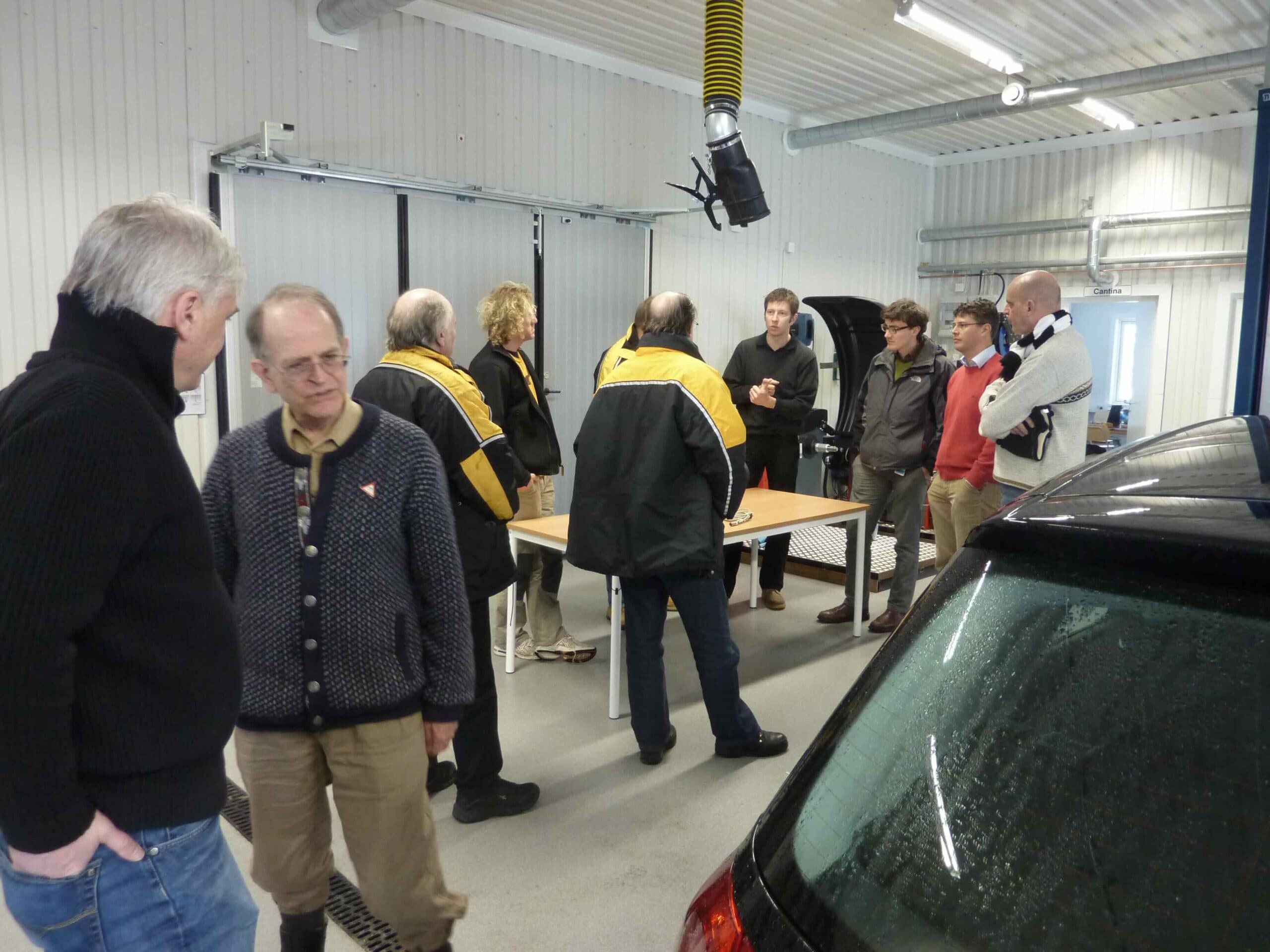
Dr. Hans-Jörg Feigel remembers the first meeting with LSP well. "The first contact with the LSP team was when they showed us an electric motor with a dual air-gap design. At that time, we had already pre-developed a brake system with three plunger actuators, which served normal brake actuation and slip control functionalities for each front wheel brake and the rear axle brakes. While effective and precise, it was expensive. If we could adopt a multiplex approach with fewer motors and pumps, it would be more affordable. Then, Thomas approached us with their idea, which seemed to address exactly this problem. I went to Munich in June 2006, and they demonstrated their system on a test bench. It was impressive. After that, we decided to move forward with a study to explore its potential."
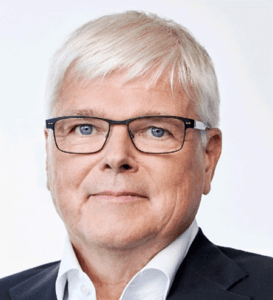
Dr. Hans-Jörg Feigel is a mechanical engineer with over 30 years of experience in braking systems, chassis technologies, and autonomous mobility. After earning his doctorate from RWTH Aachen University in 1991, he began his career at ITT Automotive, focusing on suspension control and anti-lock braking systems. Dr. Feigel spent nearly 25 years at Continental in different management positions; among other things, he was responsible for developing the MK C1 brake-by-wire system, the first integrated brake system, which finally entered series production with Alfa Romeo in 2016. From 2015 to 2021, Dr. Feigel was Vice President at Mando Corporation in South Korea and later President of Mando Europe GmbH. In 2021 Dr. Feigel returned to Continental as Senior Vice President Strategy and Innovation for Safety and Motion. Since 2024, Dr. Feigel has been the Managing Partner at INNOFINITI GmbH, focusing on innovation and strategic consulting in the automotive sector.
The patents behind the story
Explore the patents by clicking the links below (representative patent family members).
Bringing the vision to life: two perspectives on innovation
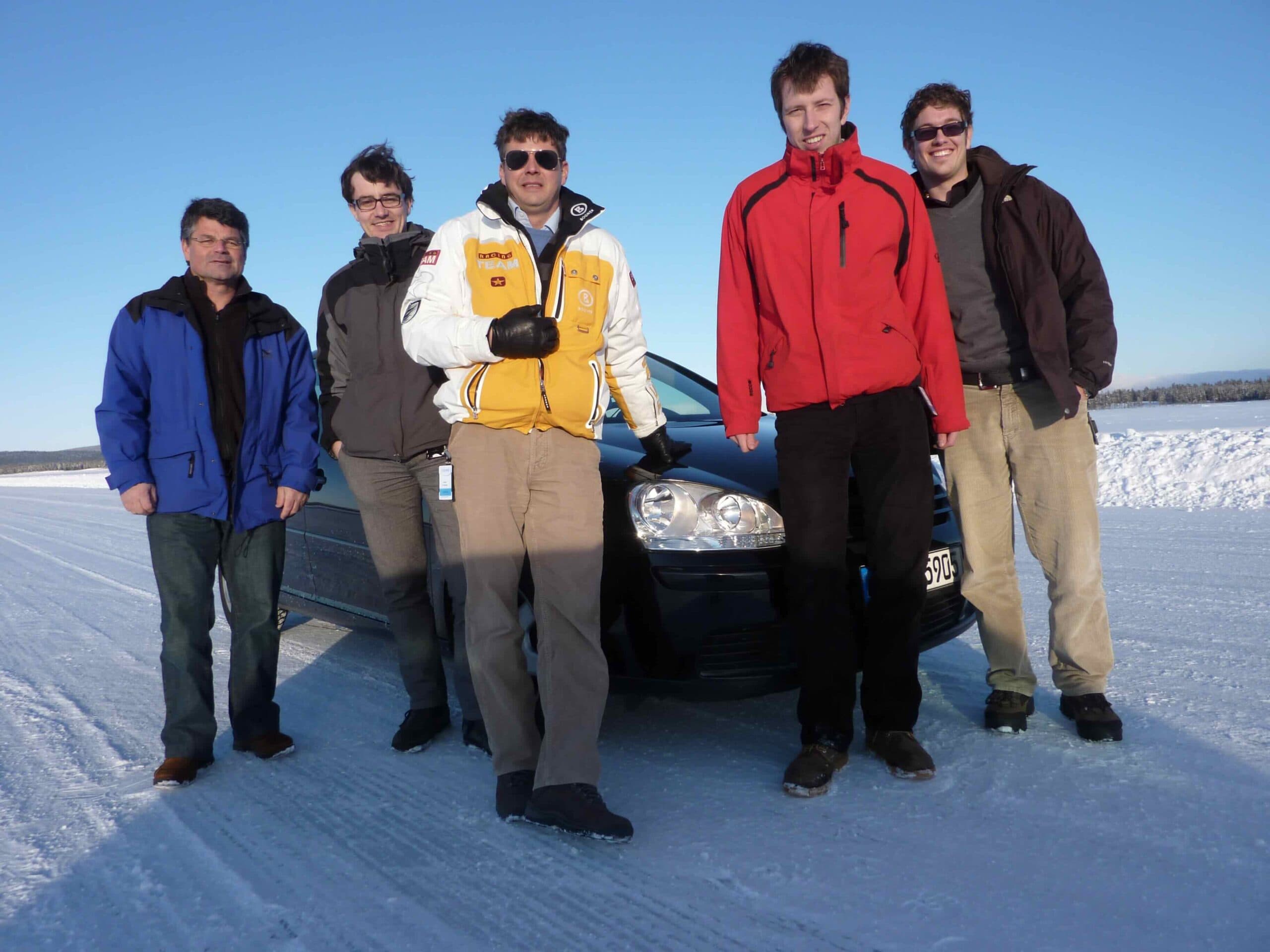
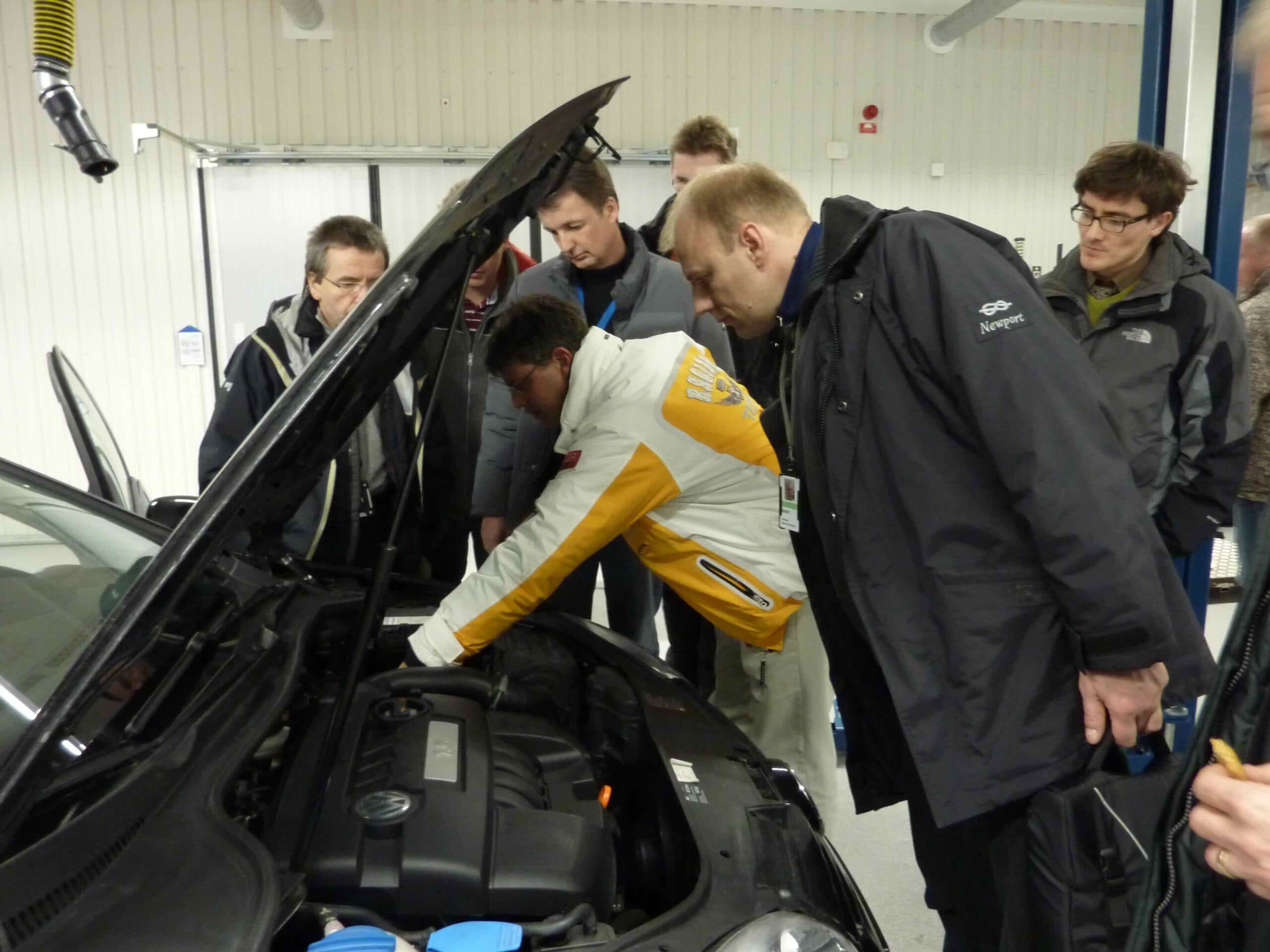
The journey to turning an innovative concept into a viable product was far from straightforward. Dr. Thomas Leiber and his team faced a pivotal challenge: proving the feasibility of their idea in a real-world environment. To do this, they arranged to test their system at a track in Sweden. But even with this hands-on testing, the real hurdle wasn't just proving that the system worked; it was convincing others of its value when most people didn't fully understand it. As Dr. Leiber put it, "Imagine selling a box of chocolates without revealing what was inside." This analogy captured the essence of their challenge: how do you sell an abstract concept that seems unfamiliar and hard to visualize?
Meanwhile, Dr. Hans-Jörg Feigel at Continental also faced his own set of obstacles. The approach from LSP wasn't simply about using a high-dynamic motor — it also involved incorporating an ABS functionality that had to meet the benchmark of brake distance of ABS systems that were on the market since 1978. Continental already had experiences with similar systems in the late '80s, such as the so-called VacMux System. While the system had functioned well in theory, it was slow, and there had been a history of disappointing results with this similar technology. Convincing these skeptics to give it another try with a highly dynamic e-motor wasn't easy.
"We had to convince the skeptics that it was worth trying again," Dr. Hans-Jörg Feigel explained. "Despite the resistance, the team at Continental recognized the potential of the new system, and the decision was made to move forward with development, starting with a Volkswagen Golf."
"Physically, you can't have two components in the same place at the same time," Dr. Feigel noted, underscoring the practicality of the technology. While the results didn't fully meet the high expectations of some colleagues, they were enough to spark real interest and show that this technology had the potential to work. This led to a major breakthrough — Continental decided to consolidate the collaboration with an agreement between the three parties, Continental, LSP and IPGATE AG, securing access to the promising new technology for future use.
A team on snow and ice
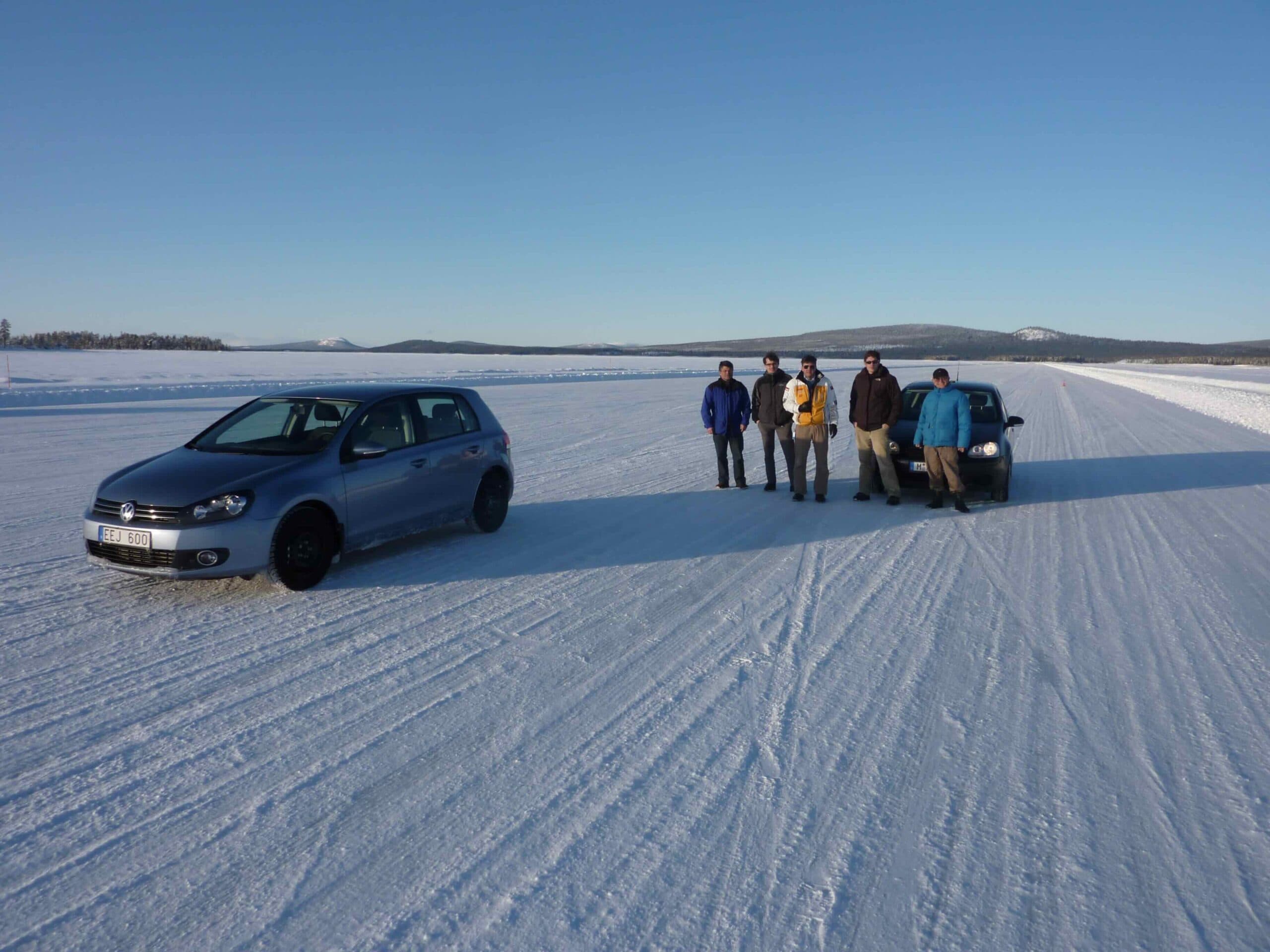
Turning a groundbreaking idea into reality was no easy task. As Christian Köglsperger aptly put it, "It's one thing to come up with ideas; it's another to get them off the ground. In big projects, you can't afford endless discussions. You need to get to work and demonstrate the basic principles, then surround yourself with the people who will push it forward."
From the outset, Dr. Thomas Leiber had great confidence in his team. "I told them, 'Just go ahead, you've got this. I trust you.' None of us knew exactly how to build a car or install a new braking system, but I had full confidence in their abilities." This trust was fundamental to the project's success, fostering a sense of autonomy and responsibility within the team.
Christian Köglsperger fondly recalled, "I remember when we first put the prototype brake system in a car. After Van Zanten fixed the software, Heinz said, 'Let's take it for a spin.' I told him, 'I don't think we're ready for the public streets just yet!' But Heinz, being Heinz, just got in, I hopped in the passenger seat, and he drove straight at a wall at high speed to test the brakes. My adrenaline was definitely up, and I'm just relieved the brakes worked!"
A key figure was Dr. Anton van Zanten, whose expertise in the Electronic Stability Program (ESP) proved critical to the team's work. Dr. Thomas Leiber called him "the key connector for everything." Despite facing personal challenges, including his inability to fly, Dr. van Zanten remained committed to the project, driving two days to Sweden for testing by train — famously losing his laptop on the return journey. "That's how committed he was to the team and the project," Dr. Thomas Leiber remembered with a chuckle.
Testing in Sweden became a defining moment for the project. As Christian Köglsperger vividly recalled, "Testing with Continental in freezing temperatures on frozen lakes was brutal, but it proved something crucial: the principles we were developing worked. The cold and harsh conditions didn't stop us from pushing boundaries." Dr. Leiber remarked, "We didn't have a fancy test facility like the big companies, so we made use of other testing locations." The excitement surrounding the tests was palpable. Dr. Leiber observed, "When we showed up, people would always gather around and want to join in on the ride."
Dr. Anton van Zanten fondly remembered the first successful test at Continental, stating, "I'll never forget the first test of our device at Continental — it worked perfectly right out of the gate. I told Köglsperger, 'If this works, I'll buy you a bottle of Sekt,' and it was one of those moments where we knew we were onto something special."
Innovating together and in parallel
While the external team at LSP focused on the dual air-gap motor and the multiplex system of the IBS, Dr. Hans-Jörg Feigel and his team worked on a parallel development track. "We were also developing the MK100 project at the same time," Dr. Hans-Jörg Feigel explained. The future brake system development team shifted the focus toward pressure increase and reduction using a central actuator, without relying on the dual air-gap motor and multiplex valves. While the internal system functioned well, it wasn't cost-effective enough for mass production in its current form.
Resistance within Continental presented another significant challenge. Most were skeptical about a second try to introduce a pedal simulator brake system after the Bosch-SBC-System failed at Mercedes in 2004. "Also, introducing design changes to improve the conditions for mass production was not easy to achieve as some people wanted to keep the development risks low," Dr. Hans-Jörg Feigel recalled, referring to the decision to replace a complex belt drive with a direct drive between the electric motor and the ball screw. The 'Not Invented Here' mindset within the company also created barriers. But despite these obstacles, Dr. Hans-Jörg Feigel and his team persevered.
"At that point, we were truly the pioneers in introducing this technology in its specific form. While the concept wasn't entirely new, the way we constructed it was a completely fresh approach," Dr. Feigel noted. This fresh approach was unveiled to the world at the 2013 Frankfurt Motor Show, where it received an overwhelmingly positive response. "The buzz it generated was incredible, attracting customers — even from our competitors," Dr. Hans-Jörg Feigel recalled. He remembered one of their main competitors sending dozens of engineers to measure the dimensions of the product. "The product wasn't even fully finished, and we weren't sure we could even fit all the necessary holes in the valve block, but we stuck to the dimensions as planned."
The real breakthrough came when Philippe Krief, the former development head at Alfa Romeo and Ferrari, made the bold decision to adopt the technology for a tight timeline project at Alfa Romeo. "Once he decided, we had to quickly kick off the industrialization process," Dr. Hans-Jörg Feigel recalled. This decision marked a turning point, not only giving the technology credibility but also demonstrating its potential to the wider industry. With Alfa Romeo and later BMW on board, the project gained momentum. "The customer's decision always triumphs," Dr. Hans-Jörg Feigel noted.
Parting ways yet remaining partners
The IPGATE/LSP and Continental innovation team parted ways in 2011 after a period of intensive collaboration but continued to interact occasionally until 2013. LSP then cooperated with TRW (formerly ZF) and engaged in other inspiring collaboration journeys. Each company contributed different elements to the invention of the One-Box as we know it today.
IPGATE and LSP made significant strides in ensuring extremely fast pressure build-up, independent of the driver's actions, using EC motors, PPC pressure control and MUX logic in ABS. This innovation allowed for quicker and more responsive braking, which was particularly crucial in the development of automatic emergency braking (AEB). Another crucial contribution from IPGATE and LSP was the development of the Fail-Safe Master Design, which ensured that even drivers less capable of applying sufficient brake force could safely brake in case of system failure — providing three times more braking deceleration using the foot's natural strength. IPGATE and LSP also introduced fully variable regenerative braking, which utilized high-dynamic and precise PPC pressure control, allowing for greater braking efficiency and improved environmental performance by recovering more energy during braking.
Continental brought their own innovations to the table. Dr. Hans-Jörg Feigel and his team were responsible for developing the ideal packaging, which allowed for a shorter vehicle build and larger crash zones. Continental also made strides in improving ABS technology by using outlet valve control for faster pressure drop into a reservoir at atmospheric pressure, resulting in shorter braking distances. The project was instrumental in shifting the industry's focus from measuring braking distance to focusing on stopping distance. The inclusion of Pedestrian Protection and the successful implementation of Automatic Emergency Braking (AEB) were also key Continental contributions.
As Valentin Unterfrauner aptly put it, "if you think about it, compared to Continental we were a small player, but Continental truly recognized the value of our contributions and technical expertise. It was all about creating something of real worth, and in the end, the recognition we earned for our innovation was priceless."
A shift in how we think of vehicle safety
Continental was the first Tier 1 supplier to industrialize the One-Box innovation, positioning itself as a leader in automotive braking technology. Today, variations of the One-Box are featured in one in every three cars on the road. By the end of the decade, it's projected that the One-Box, and the related Two-Box, will dominate the market, with electro-hydraulic braking systems becoming the standard in 80% of vehicles by 2030.
The MK C1 project forever changed the landscape of braking technology. It was no longer just about stopping a vehicle — it was about doing so with unparalleled precision and safety. The focus shifted to systems that could respond quickly, adapt to driving conditions, and protect passengers, pedestrians, and drivers alike.
Looking back on the journey, Valentin Unterfrauner reflects with pride: "I'm proud of what we accomplished. We created better brake systems, systems that didn't just meet the needs of our clients but set new standards in the industry. That's something I'll always carry with me."
Summary and outlook
The invention of the MK C1 marked a monumental leap forward in braking technology, reducing stopping distances by enabling full braking pressure build-up within 150 ms. This achievement is unlikely to be surpassed in the near future. While further improvements are possible, such rapid advancements in braking speed are rare, as any additional increase would affect the entire vehicle's dynamics.
Automated Emergency Braking (AEB) will become a new industry standard, comparable to ABS/ESP, and has already become indispensable for safety. Stopping distance will replace braking distance as the standard measurement criterion for braking systems. One of the main drivers for introducing a One-Box System, instead of conventional ESC systems with electromechanical boosters, is its ability to support higher deceleration levels of recuperating e-drives. Because there is no limiting pedal feel implication, the One-Box system optimizes recuperation efficiencies in electric vehicles, contributing to longer driving ranges.
Due to its significant functional and cost advantages, the One-Box Brake system is expected to become the most widely used brake system in new passenger vehicles worldwide by 2030. Braking systems will continue to evolve in the future, for example with the introduction of dry brake actuators, but the MK C1 has laid the foundation for this by fostering the worldwide acceptance of simulator brake systems.